  |
 |
 |
 |
|
Wild Blue Ponder
|
 |
|
Home | About Max | Pacheco | Costa Rica | BASEBALL | Diary | Birding | Liddy and Loo | Cacao
|
 |
|
Max has another web site where you can help write a novel. Click on http://wildblueponder.com

MAX BLUE'S
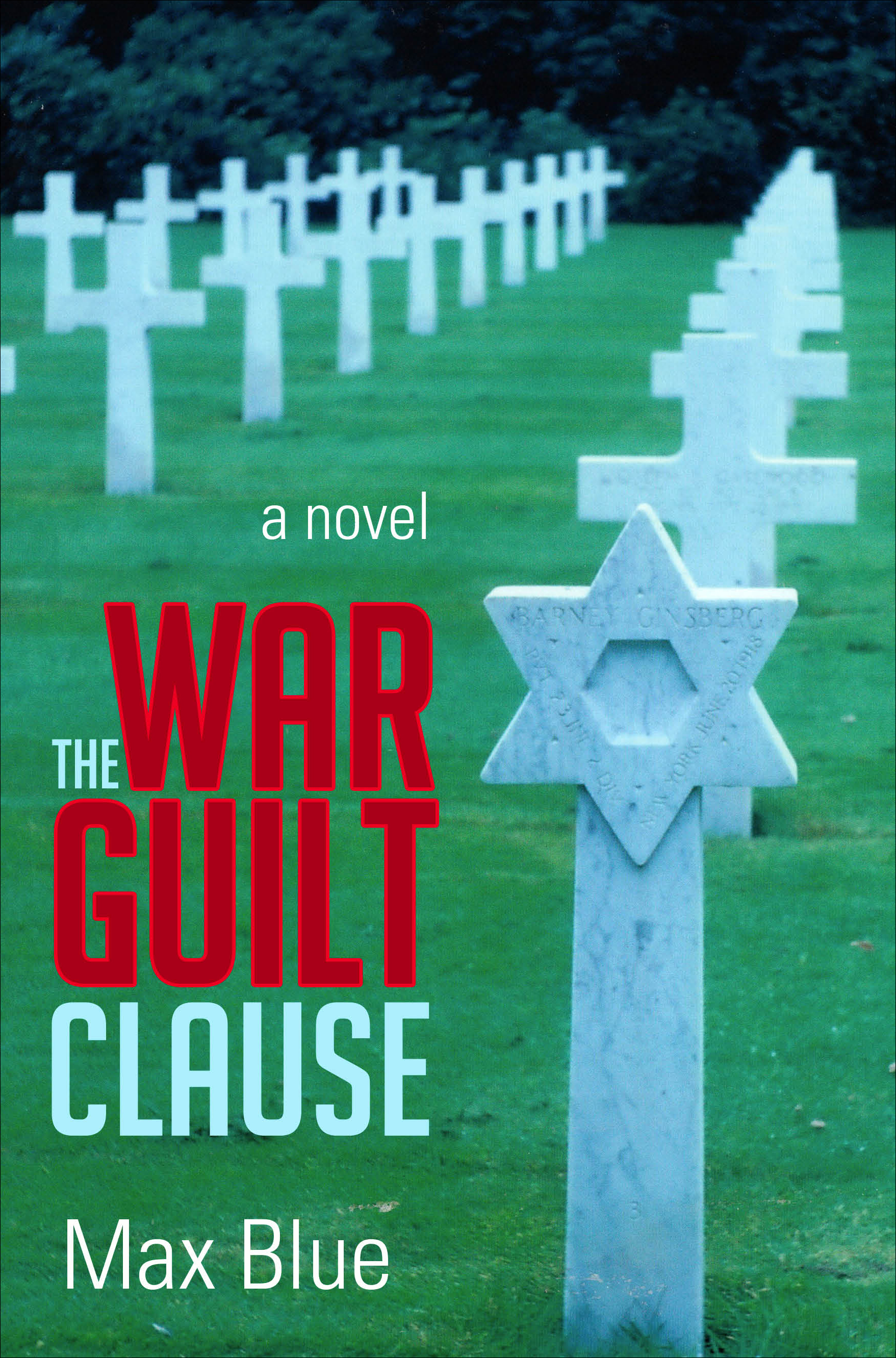
WAR TRILOGY
WORLD WAR I - Times
WORLD WAR II - For Those in Peril on the Sea
KOREA - Cold Front Passing Hokkaido
All books available from online bookstores. For signed copies contact the author directly -maxblue@snip.net
TIMES - ISBN 1-4137-0541-3 PublishAmerica - February 2004.
Cover and inside art by noted graphic artist Herb Rogoff
The book was inspired by 1) Barbara Tuchman's "The Zimmerman Telegram" 2) Leon
Wolf's "In Flanders Fields- the 1917 Campaign, 3) A lifetime fascination withWorld War I, 4) The 1916 New York Giants 26 game
winning streak and the pennant race that went with it, 5) Woodrow Wilson.
"If we do not know courage, we cannot accomplish our purpose, and this is an age that looks forward, not backward,
which rejects the standard of national selfishness that once governed the counsels of nations, and demands that they shall
give way to a new order of things in which the only questions will be, Is it right? Is it just? Is it in the interest of mankind?"
Woodrow
Wilson, 28th President of the United States of America
The characters-
1. Ted and Ed Frederick. The twins were born in Brooklyn on January 1, 1900. They will
grow up with the 20th century. The book tells what happens to them in 1916, 1917, and 1918.
2. Mom and Pop Frederick. The twins' parents.
3. Hugh Fullerton- baseball writer for the New York Times.
4. Mary Cady - The young English girl is wounded by a shell burst from a German submarine within sight of America.
The twins will protect her.
5. Woodrow Wilson - President of the United States. With all his problems he finds time to help Mary and the
twins and they to help him.
6. Edith Galt Wilson - the president's wife.
7. Mama Leona - the president's cook.
8. Joseph Tumulty - the president's personal secretary.
9. Colonel House - the president's advisor.
10. Wickham Steed - foreign editor of the New York Times
11. Voska - the Bohemian runs a spy ring in New York City.
12. Raoul Lufbery - flying ace of the Lafayette Escadrille.
Chapter One - Only a Game
Sixteen year-old Ed Frederick, hollow-eyed from lack of
sleep, looks at his mother as if she has denied the existence of God.
Mother Frederick, God bless her, has done nothing more than
she almost always does in the morning, she has told her son to sit down and eat his breakfast. This time, she has added a
piece of shocking news that expresses her own jaded view of a situation that has filled her kitchen with tense emotions for
about as long as she can take. "It's only a game," she says, "and not the end of the world."
Ed's twin brother Ted is only slightly less astonished at Mother
Frederick's dismissal of an issue that has gnawed at the boys' sense of comfort and well-being for the past six months: the
fate of the 1916 Brooklyn baseball club, currently locked in a gripping pennant race with three other teams, and only six
games remaining in the season. The destiny of the team is at issue to be sure, but of equal, if not greater importance to
the boys, is the fortune of the individuals who make up the team, men they have come to know and admire, perhaps even love,
over the course of the long, difficult season. The club is a motley collection of professional ballplayers gathered from all
around the country to carry the banner of Brooklyn to the great National League cities of the East and Midwest in a country
that seems to have fallen in love with the game when it is not caught up in some kind of labor dispute. The team is searching
for an identity-newspaper accounts of their games, often in the same column, call them the Robins, the Superbas, and the Dodgers,
a shortened version of theri original 1890 name-the Trolley Dodgers. Who are these guys?
From the book, page 149
If anyone has their finger on the pulse of events in the fall
of 1916 it is Wickham Steed, Foreign Editor of the New York Times. Steed loves bagels; he is a regular
on Ted and Ed's midnight delivery route. He sits behind his desk chewing appreciatively on a raisin bagel and eyeing Ted and
Ed in a new light. "So," he begins, "my bagel boys want to enter the shadowy world of espionage. When do you plan to sleep?"
It is a good question, but Ted and Ed have heard enough small talk and
condescension from Colonel House; they are on a mission from the President of the United States. At the same time they don't
want to be rude, their mother would not approve of that. Ted answers the question straight on. "It's more important for us
to help the President than to sleep," he says.

FOR THOSE IN PERIL ON THE SEA- ISBN-1-59286-419-8
PublishAmerica.com - 434pp - $29.95
And here are the characters:
Part one-
1. Booker T. McCan - the main protagonist.
When the story begins in 1939 he is 12 years old. His brother Davey is a hero during the Japanese attack on Pearl Harbor but
later dies when his ship is sunk near the south Pacific island of Tarawa. Booker T. vows to avenge his brother's death.
2. Count - He lives in a shanty hut in
the Peoria city dump. He is a survivor of the Civil War battle of Gettysburg. He reads Plato. He is infinitely wealthy. He
has chosen Booker T. to become the first black president of the United States.
3. Buck Fulton - A Navy boot camp pal
of Booker T. He organizes the 24-hour a day poker games on the troop transport heading for Hawaii. He makes so much money
that Booker T. calls him Bucks.
4. Flapper Jackson - Shore fire control
party officer on the cruiser Indianapolis. He enters the story pinned down by machine gun and mortar fire on the invasion
beach at the island of Peleliu.
5. Susan Land - Navy nurse who treats
Flapper after he is whacked by a Samurai sword at Peleliu.
Part two- Booker T., Count, Susan and
Flapper are all back, along with lots of new faces.
1. Arthur Holly Compton - Chancellor of
Washington University in St. Louis where Susan and Flapper (now married) are enrolled. He lectures on 'The Moral Meaning
of the Atomic Bomb'.
2. Achilles Demimelius - Professor
of chemistry at the Alabama Polytechnic Institute in Auburn where Susan joins the faculty.
3. Jerry Mulhane IV - J-four - A son of
Dixie from Pisgah, Alabama - J-four came home from the European war with a new view. He aims to become a writer and begins
by making a deal with - - -
4. Miz Sarah Lincoln, an ex-slave- J-four
will teach her to read and write and she will tell him of her joys and sorrows over the years.
5. Stanley Gordon - An API
graduate student who shares a cubicle with J-four. Stanley and J-four share a common heritage - both their fathers and grandfathers
were members of the Ku Klux Klan.
6. Virgil Young - Exalted Cyclops of the local
Klan klavern.
7. Deon McKeen - Professor of Philosophy at
API and spiritual head of the Auburn Unitarian Fellowship.
8. Bob Black - Principal of the Carver Elementary
School in Auburn. He also runs an adult literacy class.
9. Mags - Page 202 - Mary Magdalen was
a beautiful young lady with smooth mahagony colored skin, high cheekbones, and deep chocolate brown eyes.She didn't think
of herself as a whore, but by modern definition that's what she was.
10. Dean Daniel Dunn - On page 215 he addresses Booker
T. from behind the fortress of his desk - "You think just because you served in the military you should be allowed to
study at the University of Illinois?"
11. Lloyd Rhodewald, Professor of English at
the University of Illinois. As he did in 1919 so now in 1946 he begins his first lecture to the returning veterans with a
recitation of Walt Whitman's "As I Pondered in Silence" which ends with the line "I above all promote brave
soldiers."
12. Professor Odin - He tells his Political
Science 102 class that fighting a war is easy compared to making a peace and convenes the Champaign Conference onWorld Peace.
13. Dean Charles Gomillion - Dean of Students
at Tuskegee Institute - nobody worked harder at getting Negroes registered to vote in Macon county Alabama tha Dean Gomillion.
14. Moose Odell and Spider Snyder - Booker T.'s
fellow officers and best buddies on the destroyer Agerholm, during the sea war in Korea.
15. Hideko - An Okinawan bar girl.
16. Zeng-tzu- A lao-tzu, an old master. Master
Zeng. He asks: " If Heaven wishes peace and order for the world, who is there besides you to bring it about?"
From
the book-page 218:
The Professor gathered himself to his full height,
somewhere on the nether side of 5 1/2 feet, and cleared his throat . . . a signal
for quiet. He stood behind an ancient and scarred wooden lectern, eyeing the chattering class from the pit of a partially
filled 200-seat amphitheater in front of a 20-foot wide blackboard. He was a slight man with dark brooding eyebrows, and a
tuft of white hair on his head, who even as he regarded the ragged assemblage, was organizing a poem in a private section
of his brain reserved only for him. It was a device he had perfected over the years . . . he looked forward to his lectures
as a time when he often produced some of his best works. For some, a quiet time in early morning with the optimism of choiring
birds and the pink sky of a hidden sunrise . . . for Lloyd Rhodewald, Professor of English Literature, an hour before a group
of disinterested students who might only occasionally interrupt his deathless thoughts with foolish questions. As always he
contemplated the meaning of life, and currently was slogging his poetic way through the significance of atomic power in the
cosmic scheme.
The Professor withdrew an unsharpened yellow
wooden pencil from his shirt pocket and tapped the lectern, more as part of a ritual than a demand for silence; he was in
no hurry to begin. He looked up at his first post-war class, wondering what they had seen, where they had been. He scanned
the rising rows looking for eye contact, finding more than he expected. He noted missing arms and legs, eye patches, grimly
determined faces. Before the semester ended he would have occasion to consider the cosmic significance of the fact that more
than 20 percent of his class carried a lifetime burden of shrapnel fragments in their arms, legs, and backs. This was a class
in English Composition. He would ask them to write of their experiences
Gradually, and grudgingly, the class fell silent. Morning sunshine streamed through high windows around the top of the amphitheater
illuminating myriad sparkling dust particles aroused from summer calm. A student sneezed. The Professor waited. Ninety-seven
eyes focused on him. A scant 27 years before, following the war touted to end all wars, he had stood in this same spot looking
at these same faces, so recently returned from ghastly old lands. Now, as then, he would offer them Walt Whitman.
May 30, 2008
Cold Front Passing Hokkaido
by Max Blue
Strategic Book Publishers May 2008
$17.50 + $2.50 shipping.
order from (1) any online bookseller, (2) signed copy from max direct -maxblue@snip.net
It's about determined ladies and hydrogen bombs at a time when the world was steeling
for the first nuclear war.
"Cold Front Passing Hokkaido"- published in the May of 2008 is a 100,000 word novel that begins in 1940 with 10-year-old Zeng Ming-gao on a Hainan Island
mountain top watching Japanese Zeros attack a red-sailed Hainan junk. Lots of action follows as Ming-gao follows his dream
to become a pilot. Ming-gao's story is paralled by that of George Sawyer, the same age as Ming-gao but growing up a universe
away in Winston-Salem, North Carolina. Plot twists abound as Ming-gao and George meet in a Maxwell Air Field, Alabama, classroom, and
become friends, along with their wives, Chang Fong-ying, and Lindsay Mae Lewis.
.

The next several pages contain detailed summaries of all Max Blue novels.
If you want to order any of these books online(you won't find them in book
stores) just go to your favorite online bookseller -Amazon.com- BooksAMillion.com -Barnes&Noble.com-iUniverse.com-PublishAmerica.com
- browse for author Max Blue. If you want a personalized copy you can order from Max directly.
MURDER AT THE CAT was
hatched when Liddy and me were living and working at the Center for Tropical Agriculture in Turrialba, Costa Rica from 1992-1995.
We had no TV except for Latin American Novellas which are like the US soaps. We watched occasionally in the hope that it would
help us learn Spanish. We got a daily Spanish newspaper, La Nation, which we got pretty good at reading, but
mostly we read paperback novels, lots of mysteries, which we had brought with us. I soon got the idea that I could
write one of those, and MURDER AT THE CAT was born.
MURDER
AT THE CAT- ISBN 0-595-21500-9
iUniverse, inc. - 212 pp - $14.95
Peterson
Warren settled himself with a deep sigh into the tattered rusty-wheeled office swivel chair, and looked across his desk at
the small clock-calculator; seven fifteen. Through the dusty windows on his right he could see the enormous bright green leaves
of three banana trees reflecting the morning sunshine; in the afternoon it would rain. A faint whiff of gardenia reached his
nose. He picked up the sheet of paper again, and stared at it. Rafi, his collaborator, had pushed the paper under the door
sometime after Warren left the laboratory at six the previous evening. The weight
of another failed experiment settled just at the point where the trachea divides to connect the two lungs; it always made
breathing a little more difficult. With both hands he crunched the paper into a tight ball, fired it at a small corner wastebasket,
and swore under his breath as it missed by several inches.
Peterson Warren - The name is a composite of two old Navy buddies, Dick Peterson
and Jim Warren. Warren fancies himself to be a research scientist. Here he sits- in his office at the Center for Tropical
Agriculture near Turrialba, Costa Rica -The Centro Agronomico Tropical - the CAT. His pay comes from the
University of Maryland, but they have agreed to let him work here for a while.He is conflicted. Should he take time off from
his research to learn Spanish, or should he concentrate on his task of constructing a genetic linkage map for the cocoa tree?
Susan Petersen - Warren's lab technician, who keeps him out of trouble.
Luz Stella - She didn't know what she was getting
into when she agreed, along with her boyfriend Stefan, to help Pacheco in his fight against the Colombian drug lords, who
seem to have infiltrated the CAT. Stefan is the first victim, pinned to a wall by a lance through the throat. Luz Stella,
on a mission for Pacheco, learns of Stefan's death when Pacheco comes to Miami to tell her.

Bismark Pacheco Pacheco. That's him on the cover of the book-Inspector Bismark
Pacheco Pacheco. the most respected man in Costa Rica.Why? Because he is the premier crime detective in the land. The
people trust him. Pacheco's fame is so great, and his reputation for honesty so secure that he is hailed as a national hero by
campesinos throughout the hills and valleys of Costa Rica.He is called to investigate a ghastly murder at the
CAT. Eight more violent deaths are recorded before it's all over.
Pacheco's deputies - Rigo Ryan and Montoya Alfaro- in the entire world the only
people that Pacheco trusts.
Somebody is responsible for those deaths and Pacheco will track down the culprit,
you can be sure of that.
Here is a list of suspects:
1. Pierre Bonjour - the French scientist
2. Jean Vincent LePrince - French scientist-head of Biotechnology at the CAT
3. Tino Ahrens - the German scientist
4. Steve Lemon - American head of the Turrialba baseball factory
5. Oscar Blanco - security guard at the CAT
6. Powell Greenwood - the snotty British scientist
7. Gallileo - the Costa Rican lab technician
8. Dr.Ramon Brenes Gonzales - Director-General -the D-G of the CAT
9. Prospero Romulo Olivo - the gigantic sub-director.
10. Rafael Angel Dobles - Costa Rican colleague of Peterson Warren
11. Hidalgo - Head of security at the CAT
12. Marta - the wise-cracking maid
13. Gomez Aguilar - head of Genetic Resources at the CAT
14. Antonio - the Costa Rican field worker
15. Chief Hernandez- Turrialba police chief
16. Victor Hugo - el gato negro- the black cat
17. Paco - the beer-guzzling taxi driver
18. Dr. Bonifacio Miguel Arroyo - head of Sustainable Agriculture at the CAT
19. Castro Rojas - Field boss at the CAT
From the book- page 21 -
Bismark Pacheco Pacheco was in charge.
But for the lack of crossed cartridge belts over his chest, Pacheco could have been a survivor of Pancho Villas' army. He
was of medium height, solidly built, with thick, powerful wrists, and a dense black mustache that drooped almost to his jaw
line. He wore a shiny black short sleeved silk shirt, with silver piping on the two chest pockets. The shirt was open to the
fourth button revealing a thicket of black chest hair. Around his neck was a heavy silver chain from which was suspended a
silver Star of David, a popular jewelry item for Costa Rican men, not necessarily a religious symbol. A black campesino hat
was cocked on the back of his head. The only hair on his head was a wide black fringe just above ear level. Thick-heeled black
boots showed beneath his black denim jeans, held at the narrow waist with a wide black belt, and a large silver buckle. Beneath
the belt and the shirt were two cream-colored money belts, one positioned just below his well-muscled abdomen, the other in
the small of his back; each held 50 United States of America 100 dollar bills. Pacheco never went anywhere without enough
cash to take him around the world at least once.
| The Turrialba Valley |
|
|
| City of Turrialba-center. The CAT-lower left, beyond the tree. |
|
|
|
Luz Stella's tale was inspired by a lady named Ingrid Betancourt and
her book entitled "Until Death Do Us Part - My Struggle to Reclaim Colombia". I would have dedicated the book to
her but for the fact that my fiction pales in the face of her reality. The dust cover of her book tells us ". .
. the deeply personal story of a woman who gave up a life of comfort and safety to become a political leader in a
country being slowly demolished by terrorism, violence, fear, and a pervasive hopelessness." Not not long after
the book was published in 2002, Betancourt was kidnapped by Colombian terrorists. Today (12/04/06) she is still
held captive.
Luz Stella is not Betancourt-who could be?- but Luz Stella's Tale,
told against the fictional background of a Bismark Pacheco mystery, tells something of the agonizing troubles of
today's Colombia.
Luz Stella's Tale is co-authored with Wilson Abut (rhymes with 'a shoe'). More about him later.
Luz Stella's Tale - ISBN 0-595-28728-x 189 pp - $14.95 iUniverse.com
The Starlight Casino cruise ship cleared the Cape Canaveral sea buoy,
and immediately accelerated to 20 knots on a heading due east toward the Gulf Stream; the ship would reach it in 30 minutes.
Luz Stella leaned on the rail, absorbed by the specks of phosphorescence mined from the sea by the ship's bow as it plowed
relentlessly forward through the dark pliant water. The sea was flat calm, and Venus hung low on the horizon like a pilot
for the soon-to-rise full moon.
Here are the characters in Luz Stella's Tale:
1. Luz Stella - this is her tale- the Colombian mafia are on her tail.
2. Pacheco - he finds himself without a passport, stuck with Luz
Stella in the U.S., trying to find a way back to Costa Rica.
3. Nina Bell - she runs a CIA safe house in Cocoa Beach, Florida. Pacheco
and Luz Stella need her help and she will deliver.
4. Richard (call me Tom)Tomlinson - Professor of Plant Genetics,
University of Florida, Gainesville. Tells Pacheco and Luz Stella about the sword of Damocles hanging over the world's rubber
industry.
5. Bubba Driver - the gigantic former defensive tackle comes to the aid
of Pacheco and Luz Stella after their first encounter with Colombian terrorists on the Gainesville campus of the University
of Florida.
6. Wilson Abut - the journalist for the Birmingham Chronicle.
Abut knows all about Pacheco's skills, and does not hesitate to put him
to work on a case after Bubba Driver dumps him and Luz Stella in his lap.
7. Dr. Helene Stern - the crusty 80-year-old head of the Birmingham Health
First Clinic- target of an anthrax threat. She connects immediately with Luz Stella, but is not so sure about the seedy-looking Pacheco.
8. Sergeant Jim Ray Boardman- the snotty Birmingham cop.
9. Patrolman Delbert Poole - Boardman's bewildered aid.
10. Lieutenant Arthur "Spade" Cooley- head of homicide, Birmingham Police
Force. Cooley knew the young Pacheco during CIA operations along the Nicaraguan border in the Contra war.
11. Elliot Haas, Ph.D. - Co-Principal Investigator on a University of
Alabama Birmingham (UAB) Bioterrorist research program. His colleague, James Card, M.D. is found with his head cut off.
12. Officer Junior Funderburk - Highway patrolman for the Jefferson County
sheriff's office.
13.Guido Garranzo - 90-year-old mafia don - he got his first taste of
justice fighting with the Italian army at Caporetto in November, 1917.
14. Murray (Murray the Pipe) Piper, Ph.D. - Head of the UAB Justice
Science Department. He never saw a pun he didn't like.
15. Siboney Garcia - She is a plant scientist from Ecuador. Luz
Stella meets her when they both enroll in a Forensic Science course at UAB. The two latin beauties bond immediately.
16. Mrs. Brickhouse - Administrative Assistant in the UAB Center for
Disaster Preparedness. Pacheco soon learns that nobody messes with Mrs. Brickhouse.
17. Bobby Sanchez- Graduate student in the UAB Microbiology Department.
Siboney's man.
18. Clinton Lake, Ph.D.- Head of UAB Microbiology Department.
19. Officer Dooley Stone - Birmingham Police Department.
Who done it?
From the book - page 118:
| Wilson Abut |

|
| and the lovely Angela too |
There we sat, Liddy and me with our friends Ken and Angela Pruitt, looking out
at a beautiful little sky (a Cielito Lindo) 5,000 feet above the sea in Monteverde,Costa Rica. What could we do? We had to
write a book. Pruitt needed a pen name - Wilson Abut was born. Pruitt plays the tuba-seriously-he plays it every day of his
life, except when he is in Monteverde, then he thinks about it. The perceptive will note that Abut is tuba spelled backwards.
CIELITO LINDO- ISBN-0-595-20806-1
iUniverse.com - 195 pp-$13.95
Paco had been here before, stuck behind a timber-hauling flat-bed truck creeping up the long winding slope on that stretch
of the Pan-American Highway connecting the hot, dry western coastal plain to the noticeably cooler, and infinitely more comfortable
great central valley of Costa Rica; it was a five-mile climb. He checked the temperature gauge on his dusty, dented, eight-year-old
Isuzu Trooper, noting that it was slowly rising, and hoping it would not hit red before they reached the top of the hill he
estimated about eight kilometers ahead. His world had shrunk to a bullseye view of three, two-meter diameter, five meter long
kapok logs stacked in a triangle which he sincerely hoped were secured properly with the heavy chains he could see holding
them. It concerned him that no vehicles were presently coming down the hill in the left lane ... it meant that there was a
blockage somewhere up ahead, and that meant one-way traffic, and that could only mean that before long the present creeping
pace would be replaced by a complete stop, and that meant the temperature gauge would head off the scale, and there was not
a damned thing he could do about it. Well, he could turn around and go back, but what was the point of that? He was on his
way to the airport; he couldn't get there by going in the opposite direction. But Paco was cool. He flipped off the air-conditioning
to save the battery, rolled down the windows, reached into the cooler on the floor in front of the passenger seat, and pulled
out a cold can, instantly sweaty in the humid air, of his beloved Imperial, the best beer in Costa Rica, and for that matter
anywhere else he could think of. He turned up the volume on the radio and began singing along with the chorus of his favorite
song . . . Cielito Lindo. "Ai yai, yai, yai, canta y no llores" . . . no tears for Paco, life was good.
The characters, in order of appearance:
1. Paco - the beer guzzling taxi driver. You remember him from Murder
At the CAT. He shaves on Tuesday and Thursday.
2. Gunter Kaufmann - the Swiss businessman who has come to purchase the
village of Santa Elena, just down the road from Monteverde.
3. Igor - Kauffman's valet.
4. Wilson Abut - the journalist is on vacation in Monteverde,
and takes the opportunity to document his observations for his readers back in Birmingham, Alabama.
5. Heraldo Rodriguez - the bewildered Chief of Police(staff of one) for
the village of Santa Elena.
6.Inspector Pacheco - he is called to Santa Elena/Monteverde to deal
with the latest in a series of armed robberies. He can't seem to remember that the Chief's name is Rodriguez, not Hernandez.
7. Pacheco's deputies - they are all here- Rigo, Montoya, and Luz Stella
who recently joined the team as a forensics expert. Just in case, they have all brought their musical instruments - Rigo-clarinet;
Montoya-flute; Luz Stella-French horn; Pacheco-tuba. All, of course, play the two-tiered marimba.
8. Castro Acosta - the Monteverde nature guide who witnessed the holdup
at the Villa Verde Lodge. He is more concerned that somebody is killing the Resplendent Quetzals.
9. Manuel Zurida - tour guide of the robbed tourists from Sheboygan.
10. Raoul Vegas - bus driver of the tour group.
11. Rodrigo Delgado - Vice President of the Santa Elena Bank.
12. Terrence Dunbar - the Jamaican nature guide.
13. Kenneth - the vodka-swilling poet who searches for meaning.
14. Harry Hinsdorf - the rotund New Jersey tourist.
15. Heinrich and Henning - the Helfen twins.
16. Ula and Eva - the twins' brides - they are here from Schaffhausen
on the second leg of a Swiss honeymoon and become kidnap victims.
17. Bonnie and Arnold - the UCLA students, down on Spring break for a
bird-outing who also become kidnap victims.
18. Macho, Carlos, Juan, and Miguel - the four muchachos. They
know the forest better than anyone and Pacheco puts them to work for him.
19. Romulo and his wife the redoudtable, if not formidable wife, Hanna
- yep, it's the same Romulo- no scale in Costa Rica is big enough to weigh him.
Some of Kenneth's poetry:
Cielito Lindo
I sat on the edge of my cloud-forest glen
and saw a mountain of clouds rise into
the beautiful little sky.
As I watched the clouds billow higher
and reflect the dazzling white from the rays
of the noon sun,
out of the cloud-mountain
a silver arrow appeared
moving purposefully and unwaveringly
toward an unseen and unknowable target.
From the other side arose a black bird
soaring on the rising breeze,
its wings spread wide and wavering gracefully
to catch and balance against the down-drafts and cross-currents.
And the Earth turned,
and the cloud-mountain
sank below the green trees
and the beautiful little sky
was left all empty,
blue and alone.
Like me.
|
 |
|

| Oliver LaGrone - Count in the book |

|
| and the poet Ernest Sommerfeld |
Sixty three years after the event there are still men living who were on the
deck of the USS Oklahoma when the Japanese attacked Pearl Harbor. Just a few years ago, a letter to the editor of the Philadelphia
Inquirer told of seeing Dorie Miller, an African-American steward's mate, man a machine gun trying to fight off the attackers,
and later make a valiant effort to save the life of his mortally wounded commaning officer. Max Blue's novel, For Those In
Peril On the Sea, was inspired by the story of Dorie Miller.
It began one snowy christmas day in 1982 when I sat in front of my first computer,
an Epson that served me well, and began to write the story of a rescue at sea that happened on my ship, the USS John
R. Craig DD885, during the Korean War. I called the story "Boats" and it later became the prologue for Peril On the Sea. I
was given permission to use an African-American protagonist by Oliver LaGrone- poet, sculptor, philosopher, friend, who became
Count in the story.
The book was published in March 2003 after endless revision. At one point the
book was two books, but in the end became one book with two parts. Part one is about the Pacific island battles in WW II,
part two is about the civil rights battles in Alabama in the early 1950s. I always knew the book needed a third part
to complete the saga, and only last week (Dec.2003) I finished the first draft of "OVERCOME", which hopefully will be published
sometime next year.
FOR THOSE IN PERIL ON THE SEA- ISBN-1-59286-419-8
PublishAmerica.com - 434pp - $29.95
PROLOGUE
Silent as death was the room. Only the occasional
rattle of the window and moan of the wind broke the monotony. The old man slowly got up from his chair by the window, rearranged
the shabby blanket over his shoulders, and moved with short, halting steps to a small table where he bent to turn on a battered
radio.
. . . clouds
thickening late in the afternoon. Blizzard conditions are expected with accumulations up to eight inches. Temperatures will
fall to zero degrees or below. Wind chill factor of forty below. You are advised to stay inside if at all possible . . .
The old man returned to his chair, where he watched
the wind-blown snow rise in great clouds, blocking the sun and causing oddly shaped shadows to be cast on the frozen ground.
At intervals the gusts subsided, and the bright sun reflected with dazzling brilliance on the freshly fallen snow. Each flake,
it seemed, caught the rays, bounced them around, and discarded them to be seen as sparkling gems to the attentive eye.
. . . and now, live from the Chapel of King's College in Cambridge, England, we present a Festival of Nine Lessons and Carols. The program combines the readings
of Biblical Christmas lessons with performances of traditional hymns and carols . . .
The old man was alone with his memories, but
they were rich, and he reviewed them often. These days his needs were few, which matched his resources. He wanted to get through
another winter. He looked forward to spring, and to sitting on a bench in Riverfront
Park with his friend Sparks. They liked to watch the boats on the river and swap
sea stories; both had served many years in the Navy, mostly at sea.
. .
. with righteousness He shall judge the poor . . .
As the snow swirled before his eyes, it was
transformed into salt spray . . .
. . . He struggled to keep his balance on the wildly
gyrating, ice-slick deck of a U.S. Navy World War II Geary class Destroyer. The admirals and politicians liked to call these
ships the greyhounds of the fleet. The men who made them go called them tin cans and rust buckets.
A crew of three men in life jackets huddled close
to the bulkhead, port side, just forward of the amidships passageway. He saw the fear in their eyes, and measured it against
his own. As Boatswain's Mate First Class, he had been in charge of more fueling details than he could count, but he had never
seen one like this. The sea was the enemy, and it was attacking from all sides with battleship force. He could see waves crashing
over the bridge, 50 feet above him.
Okay, you shit-birds, let's get some fuckin' lifelines
rigged here, whaddaya think this is, a fuckin' picnic? He shouted above the roar of the sea.
What the fuck's goin' on, Boats? The Old Man tryin'
get us all killed? It was Vink; Boatswain's Mate Third Class, arms like 16-inch shells, the strongest man on the ship, and
probably in the whole 7th Fleet.
Never mind about the Old Man, he wouldn't have us
out here if he didn't think we could handle it.
Boats was not as confident as he sounded. He knew
the Captain was fueling out of desperation. Normally they fueled at sea every six or seven days, but the weather had been
so rotten the Old Man had put it off for four extra days hoping for a break; instead, it got worse. Boats also knew that running
out of fuel was of less concern than restoring ballast. In a sea like this, with fuel tanks depleted, the Captain was worried
about capsizing.
Boats trusted the Captain; had trusted him since
the first day he came aboard in Nagoya. The Captain was a redheaded Irishman,
rough as a barnacle, and fearless as a hammerhead shark. Boats remembered the first time the Skipper took the con leaving
Nagoya. They were tied up alongside a dock, and no sooner had the All lines clear
call gone to the bridge, than he heard a quiet but firm voice of authority say, All back full. The ship had shot backwards
from the dock and into the channel in an instant. The Captain knew the crew was watching him, and the cheer from the fantail
let him know they liked his style.
Boats also remembered how the Old Man had backed
him the last time Vink got in trouble on liberty in Sasebo. He had simply told
the Captain, I need Vink. Now the Captain needed him, and he didn't have to be reminded.
The ship was maneuvering to come alongside an aircraft
carrier they could barely make out, laboring in the heavy seas several thousand yards ahead. Just our luck, he thought, to
get mixed up with a bunch of flyboys instead of some real Navy tanker-men who know what they're doing. This would not be easy, but he knew the Captain had the con, and Chief Petzhold had the helm, and this comforted
him. It was no time for amateurs.
.
. . and the Angel of the Lord seduced the Virgin Mary . . .
You got everything under control, Boats? The high-pitched
voice from behind jarred him. It was Ensign Craig, an Engineering Division Officer.
Boats thought
Why can't this little shit just go away and leave us alone? All he can do is
get in the way. He threw a half-salute at the Ensign and shouted, Yes, sir.
Ensign Craig was a hopeless case. Out of some ROT
corps school in Texas. A pharmacist, for Christ's sake, and the Navy wanted
to make an Engineering officer out of him. The Ensign had been aboard for eight months, and still didn't know his ass from
the after fan room.
Look, Mr. Craig . . . The words were half out of
his mouth when the deck dropped like a falling roller coaster, and a monster wave slammed him against the bulkhead. He managed
to stay on his feet, and immediately saw that his men, hooked to the lifeline, were safe.
Ensign Craig was not. The wave caught the young officer
off balance and folded his back around a life raft stanchion like a gymnast on a high bar. He crumpled to the deck, and floated
quietly off into the wildly tossing sea.
MAN OVERBOARD! Boats bellowed.
Seaman Faust on the sound-powered phones relayed
the message to the bridge. Man overboard, port side amidships, this is not a drill.
. . . go
and search diligently for the young child . . .
Boats riveted his eyes to Ensign Craig in the bright
orange life jacket growing smaller and smaller in the foaming, swirling sea. The Ensign was either paralyzed or unconscious
because there was no sign of him struggling.
The ship heeled sharply to port, and rolled at a
perilous 45-degree angle as the Captain did not hesitate to attempt rescue of the stricken man. The sound from the ship's
loudspeakers filled the air, the voice sounding almost nonchalant. Now hear this. Now hear this. Man overboard, port side.
Man overboard, port side. All hands, man your man-overboard stations. This is not a drill. This is not a drill.
They had practiced this procedure until they were
sick of it, but always in fair weather. The drill called for putting a whaleboat in the water, but today, Boats thought, if
we try that we might have the whole boat crew in the water. He knew what he had to do. Vink, he shouted, secure this line
to the winch, I'm goin' after him. He tied one end of an inch-thick hawser around his waist.
You're crazy, Boats. You can't swim in that sea.
When I reach him, I'll signal with the Very Pistol.
He patted the holster on his belt, and dived into the water.
Boats was a strong swimmer, but more than strength
was needed here. He had gauged the direction and flow of the waves, and as the ship came around, judged the moment to jump
that would carry him as close as possible to the man in the water. The surge of the slate-gray sea carried him to within 20
yards of the crippled Ensign, and he began to swim towards him with all the strength he could muster. Instantly he sensed
that he could make headway, and the feeling exhilarated him because he knew that the rescue would be successful. In ten minutes
that seemed like hours, he was alongside the helpless officer, who looked at him with grateful eyes. What took you so long,
Boats? he asked.
Boats secured the line around the Ensign's waist
and said, Navy red tape, sir. I had to apply for hazardous duty pay. He fired
the Very Pistol.
. . . when
they saw the star they rejoiced with exceeding great joy . . .
Later, in a Yokosuka
bar, one of his drinking buddies asked him a question. Boats, how come you risk yo black ass to save that pimp Ensign's white
ass?
. . . he came unto his own and his own received him not . . .
Boats didn't know the answer then, and after all these years, he still didn't know the answer. One thing he did know though;
whatever the answer was, it had nothing to do with skin color.
. .
. full of grace and truth .
And here are the characters:
Part one-
1. Booker T. McCan - the main protagonist.
When the story begins in 1939 he is 12 years old. His brother Davey is a hero during the Japanese attack on Pearl Harbor but
later dies when his ship is sunk near the south Pacific island of Tarawa. Booker T. vows to avenge his brother's death.
2. Count - He lives in a shanty hut in
the Peoria city dump. He is a survivor of the Civil War battle of Gettysburg. He reads Plato. He is infinitely wealthy. He
has chosen Booker T. to become the first black president of the United States.
3. Buck Fulton - A Navy boot camp pal
of Booker T. He organizes the 24-hour a day poker games on the troop transport heading for Hawaii. He makes so much money
that Booker T. calls him Bucks.
4. Flapper Jackson - Shore fire control
party officer on the cruiser Indianapolis. He enters the story pinned down by machine gun and mortar fire on the invasion
beach at the island of Peleliu.
5. Susan Land - Navy nurse who treats
Flapper after he is whacked by a Samurai sword at Peleliu.
Part two- Booker T., Count, Susan and
Flapper are all back, along with lots of new faces.
1. Arthur Holly Compton - Chancellor of
Washington University in St. Louis where Susan and Flapper (now married) are enrolled. He lectures on 'The Moral Meaningof
the Atomic Bomb'.
2. Achilles Demimelius - Professor
of chemistry at the Alabama Polytechnic Institute in Auburn where Susan joins the faculty.
3. Jerry Mulhane IV - J-four - A son of
Dixie from Pisgah, Alabama - J-four came home from the European war with a new view. He aims to become a writer and begins
by making a deal with - - -
4. Miz Sarah Lincoln, an ex-slave- J-four
will teach her to read and write and she will tell him of her joys and sorrows over the years.
5. Stanley Gordon - An API
graduate student who shares a cubicle with J-four. Stanley and J-four share a common heritage - both their fathers and grandfathers
were members of the Ku Klux Klan.
6. Virgil Young - Exalted Cyclops of the local
Klan klavern.
7. Deon McKeen - Professor of Philosophy at
API and spiritual head of the Auburn Unitarian Fellowship.
8. Bob Black - Principal of the Carver Elementary
School in Auburn. He also runs an adult literacy class.
9. Mags - Page 202 - Mary Magdalen was
a beautiful young lady with smooth mahagony colored skin, high cheekbones, and deep chocolate brown eyes.She didn't think
of herself as a whore, but by modern definition that's what she was.
10. Dean Daniel Dunn - On page 215 he addresses Booker
T. from behind the fortress of his desk - "You think just because you served in the military you should be allowed to
study at the University of Illinois?"
11. Lloyd Rhodewald, Professor of English at
the University of Illinois. As he did in 1919 so now in 1946 he begins his first lecture to the returning veterans with a
recitation of Walt Whitman's "As I Pondered in Silence" which ends with the line "I above all promote brave
soldiers."
12. Professor Odin - He tells his Political
Science 102 class that fighting a war is easy compared to making a peace and convenes the Champaign Conference onWorld Peace.
13. Dean Charles Gomillion - Dean of Students
at Tuskegee Institute - nobody worked harder at getting Negroes registered to vote in Macon county Alabama tha Dean Gomillion.
14. Moose Odell and Spider Snyder - Booker T.'s
fellow officers and best buddies on the destroyer Agerholm, during the sea war in Korea.
15. Hideko - An Okinawan bar girl.
16. Zeng-tzu- A lao-tzu, an old master. Master
Zeng. He asks: " If Heaven wishes peace and order for the world, who is there besides you to bring it about?"
From
the book-page 218:
The Professor gathered himself to his full height, somewhere on the nether side of
5 1/2 feet, and cleared his throat . . . a signal for quiet. He stood behind
an ancient and scarred wooden lectern, eyeing the chattering class from the pit of a partially filled 200-seat amphitheater
in front of a 20-foot wide blackboard. He was a slight man with dark brooding eyebrows, and a tuft of white hair on his head,
who even as he regarded the ragged assemblage, was organizing a poem in a private section of his brain reserved only for him.
It was a device he had perfected over the years . . . he looked forward to his lectures as a time when he often produced some
of his best works. For some, a quiet time in early morning with the optimism of choiring birds and the pink sky of a hidden
sunrise . . . for Lloyd Rhodewald, Professor of English Literature, an hour before a group of disinterested students who might
only occasionally interrupt his deathless thoughts with foolish questions. As always he contemplated the meaning of life,
and currently was slogging his poetic way through the significance of atomic power in the cosmic scheme.
The Professor withdrew an unsharpened yellow wooden pencil from his shirt pocket
and tapped the lectern, more as part of a ritual than a demand for silence; he was in no hurry to begin. He looked up at his
first post-war class, wondering what they had seen, where they had been. He scanned the rising rows looking for eye contact,
finding more than he expected. He noted missing arms and legs, eye patches, grimly determined faces. Before the semester ended
he would have occasion to consider the cosmic significance of the fact that more than 20 percent of his class carried a lifetime
burden of shrapnel fragments in their arms, legs, and backs. This was a class in English Composition. He would ask them to
write of their experiences
Gradually, and grudgingly, the class fell silent. Morning sunshine streamed through high windows around the top of the amphitheater illuminating myriad sparkling
dust particles aroused from summer calm. A student sneezed. The Professor waited. Ninety-seven eyes focused on him. A scant
27 years before, following the war touted to end all wars, he had stood in this same spot looking at these same faces, so
recently returned from ghastly old lands. Now, as then, he would offer them Walt Whitman.
There's nothing like getting really close to something to find out about its
warts. Max Blue was an academic for more than 30 years and got to see a lot of warts. When Max finally shook free of university
life and took to writing fiction, it was only a matter of time before he wrote a story about some of the things he learned
in those years. The novel HIGHER ED is what came out when Blue sat down to write about it. The story took some odd twists
before Blue's sometimes wondering eyes-he had not planned for it to be a satire, not educated as a writer, he wasn't
even sure what the word meant. But when the name of the university where the book's main protagonist, six feet nine inch Edward
Appleton, toils, turns out to be an anagram for Walt Disney, the tone is set. In the back of his mind as he wrote, was one
of Blue's clues for academic survival: Never trust a guy or gal who wants to be Dean or Department Head: if he/she
wants the job he/she probably shouldn't have it.
HIGHER ED - ISBN - 0-595-20712-X
iUniverse - 232 pp $14.95
The president, Dr. Edward Appleton, all six feet nine inches of him . . . Higher
Ed they called him, cursed softly under his breath, then jumped to his feet and shouted, "Merde! Merde! Merde! Merde!"
Higher Ed was a music man, proud holder of a Ph.D. in music from the University of Paris, writing his dissertation
on the subject of tragedy in Italian opera. Higher Ed knew tragedy when he saw it, and right now it was staring him in the
face. He slammed down the receiver of the telephone, and slumped back into his chair. Sidney
Universitys star fullback, "House" Finch, had just been arrested for petty theft
and receiving stolen goods and the big game with Southern California was only four days off. If this
wasnt a tragedy about to happen, what else could you call it? Someone should put it to music.
The characters:
- Edward Appleton -President
of Lawt Sidney University
in San Diego. Hes Higher Ed and he's got his hands full.
- Irene Appleton- First Lady
of the campus. Higher Ed calls her Norma after the high priestess of the Druids in Bellini's opera. When she sings the Casta
Diva Higher Ed is reduced to tears.
- Marcus Elay -Chiropractor
to the rich and famous. The original Lawton Sidney made him rich in the early days of the movie industry and Marcus is now
the number one benefactor of the University. They named the Medical School
after him. Of the 7 dwarfs who make up the board of directors, Marcus is Grumpy.
- Dean Daniel Stonewood -Dean
of the College of Medicine. He has this
obsession with Robert Service ballads. He is Dangerous Dan Stonewood. You don't want to know this guy.
- Lew Benson -Associate Professor
of Biochemistry. It's this business of promotion - Lew would rather be in the lab. Where did he get the idea that the medical
school might be interested in Biochemistry?
- Adam Andrews -Marcus Elay's
only grandson. Can Marcus keep his heir from being drafted and sent to Viet Nam?
Does the sun rise in the east?
- Mel Private- Organic chemist
extraordinaire, the one true polymath on the Sidney faculty. Ask him about mountain
climbing, spelunking, baseball, horse racing, photography, military history, and so on.
- Susan Land Jackson - Tired
of the civil rights battles in Alabama, Susan is here to teach biochemistry to medical students.
- Flapper Jackson - Somebody
has to teach these prospective healers about ethics. Flapper is the man. His personal ethics are tested when he is attracted
to the president's fine wife.
- Trace Manning -The messenger
man. B.S. in botany from Wisconsin. M.S. in botany from Missouri.
Ph.D. in genetics from Columbia, and postdoctoral work at the Rockefeller Institute.
Manning was doing pioneering work in messenger RNASidney needed him.
- Britt-Marie Lundgren -The
classic Swedish beauty who captures Adams heart when they meet as post-doctoral fellows at the Rockefeller.
- Mickey Cochrane -Adam's rival
for Britt-Marie.
- Ledgar Dealman -Nobel-prize
winning Rockefeller scientist. Can Higher Ed and Marcus Elay convince him that a move to Sidney U. would be good for everybody
concerned?
- Minerva Ratoncito- The stunningly
beautiful lab technicianwho else could bring Mickey Cochrane out of his slump?
- The Sidney University Board
of directors -Marcus Elay, Chairman; Ma Jong, proprietress of the Shanghai Teahouse; Edward (lower Ed) Muldoon, Chief Boatswains
Mate on a 7th fleet destroyer; Billy Sandalmaker, a jockey; Orville, the gimp Westenheimer, an overhead crane operator
on the San Diego docks; Doc Rivera, chief veterinarian for the Agua Caliente race track and the Tijuana Bull Ring; Feliz Gonzalez,
tuna boat captain.
- Marta Aguilar- wife of auto
mechanic Miguel Aguilar. Marta Aguilar has all the answers.
From the book - page
86
Irene Appleton, mother of three, grandmother of five, could have passed for a medical student. Her shoulder length
auburn-colored hair was tinted to hide a few streaks of gray. She wore a black turtleneck sweater and bluejeans. A gray tweed
jacket was draped over her shoulders. She felt a small thrill as she watched Flapper climbing the steps of the amphitheater,
his eyes locked on hers. When at last he sat next to her, she held his hands, looked into his hazel eyes, and said, "Be prepared
for heartbreak."
Flapper
returned Irene's unblinking gaze. It was not the first time in his life that he had looked into the eyes of a beautiful woman,
but it was the first time he had done so without feeling the need to say anything. For a long moment they sat like that. Irene
moved closer. Flapper caught a faint whiff of Shalimar. When the tension at last became unbearable, Flapper broke the
spell. "We have to stop meeting like this," he whispered even though it was the first time. She smiled, kissed him on the
cheek, and moved back.

| Jaybird leads the parade |

|
| Cocoa Beach- Dec. 2003 |
For some 25 years on either side of the middle of the 20th century there really was a place called Giessow's Cottage
Farm. It hasn't changed very much here in the next century although the name Giessow has been dropped by the new
owners. Jaybird, the main protagonist of the book, is still around too, in fact only last week he was the Grand Marshall of
the Cocoa Beach, Florida Christmas parade and was named Rotarian of the Year by the Cocoa Beach Rotary Club. He told me he
had a hole-in-one a few days prior to his 76th birthday, but don't expect me to believe that. Some of the things that are
described in the book really did happen to Jaybird, but most of it is just made up for the fun of it.
GIESSOW'S COTTAGE FARM -ISBN -0-595-20651-4
iUniverse - 216 pp -$14.95
Jaybird was bored. The novelty of sitting in a high row of the small amphitheater looking down on the teacher had long
ago worn off. The school year as usual had gone too long, and still it was only April.
He looked around the room at the backs of the heads of all those ratty kids
sitting in front of him . . . those pitiful kids had probably never seen a Shetland pony in their lives, much less ever ride
one the way he did last summer at his Grampa's summer resort . . . at Giessow's Cottage Farm. He could feel the
warm breeze flowing against his face as he pressed his knees against the pony's smooth sweaty flanks racing at full gallop
down the dusty gravel road. He was riding bareback . . . no saddle, no shirt . . . just like the Indians used to do.
And here are the characters:
1. Jaybird - He's 11 years old and ready to try anything.
2. Rin - Jaybird's German Shepherd dog. He goes where Jaybird goes.
3. Phil - Also known as Crazy Dan - you'll see why.
4. Otto Giessow - Jaybird's grampa. He built and operates "the Farm".
5. Katie Giessow - Jaybird's grandma. She's in charge of the home brew.
6. John Frederick- Jaybird's dad. He's called 'Coach'. He's ready to 'tan that kid's hide'.
7. Edith Frederick - Jaybird's mom. Jaybird has taken to the hills and she's frantic to get him back.
8. Donnie Giessow - Jaybird's cousin. Two years younger than Jaybird, Donnie is not so sure running away is a good idea.
9. George Giessow - Jaybird's uncle. Maybe the only one who understands Jaybird.
10. Captain Lynch - His job is to organize a search party to find Jaybird, but he would rather ride a horse.
11. Jennie Wren - Her real name is Ruth Stoltzfuss. She is 12-years old and is ready to run away with Jaybird.
12. Abraham Stoltzfuss - Jennie Wren's father. He knows why Phil is called 'Crazy Dan'.
13. Mother Stoltzfuss - She binds all wounds, and makes a pretty good pot of bean soup.
14. Dr. Land - Horse doctor to the rescue.
15. Eb King - He runs the General Store in Grubville.
16. Mysterious Brown, Blinky, and Frog - Hobo friends of Phil. Mysterious makes a great potof Mulligan Stew. Jaybird
wonders why they call Phil 'Chief Hogsett'.
17.Chief Hogsett - A lefthanded pitcher for the St. Louis Browns.
18. Milt "Alabam" Delmas - Equipment manager for the Browns.
19. Rogers Hornsby - Browns' manager.
From the book - page 152
Phil grabbed the dice. "Watch this, Jaybird," he said.
Jaybird watched. Jaybird had never before seen a crap game so he did
not know what to look for. He knew something good had happened when Phil's first roll came up a 4 and a 3, and Phil picked
up $20 off the blanket and winked at him. When Phil's second roll came up a 5 and a 2, Jaybird knew from the groans, and from
Phil's million dollar grin, that his friend was making money just as he said he would.
| Grampa Giessow's Store |

|
| Grand and Olive - Giessow's Cottage Farm |
It's baseball and Max has a separate link for it. How could he not? Max actually
did play for the Appleton Papermakers, a St.Louis Browns farm club in the Class D Wisconsin State League. It
was 1950, the year the Korean War began. Max was a left-handed hitting catcher who had all kinds of trouble catching up with
a good fastball, but he can still remember that night he smacked a double to left with the bases loaded against Green Bay.
There are people who question the importance of baseball. Not Max, and not
A. Bartlett Giamatti who wrote a book called The Greenfields of the Mind.
He wrote:
Of course there are those who learn after
the first few times. They grow out of sports, and there are others who are born with the wisdom to know that nothing lasts.
They are the truly tough among us, the ones who can live without illusion or without even the hope of illusion. I am not that
grown up or up-to-date. I am a simpler creature, tied to more primitive patterns and cycles. I need to think that something
lasts forever, and it might as well be that state of being that is a game; it might as well be that, in a green field, in
the sun.
GOD IS ALIVE AND PLAYING THIRD FOR THE APPLETON PAPERMAKERS
- ISBN -0-595-20621-2
iUniverse - 265 pp - $17.95
The book has five parts, here is the table of contents:
One - Pennant Races
The Streak
Jaybird and Me
Two - What is a Novel Without at Least One Baseball Chapter?
Times
Chapter 1- The Most Protuberant Event in Baseball History
Chapter 3- Winner Gets the Dough
For Those In Peril On the Sea
Chapter 11- Colonel Nishi and the Bbrowns
Giessow's Cottage Farm
Chapter 17 - Stoltzie
Chapter 19 - Baseball is Played Here
Murder At the CAT
Chapter 2 - The Turrialba Baseball Factory
Higher Ed
Chapter 8 - Mel Private - 1969
Three - A Time to Coach
Aces and Eights
Four - Life of a Fan - How to Root for a Losing Baseball Team
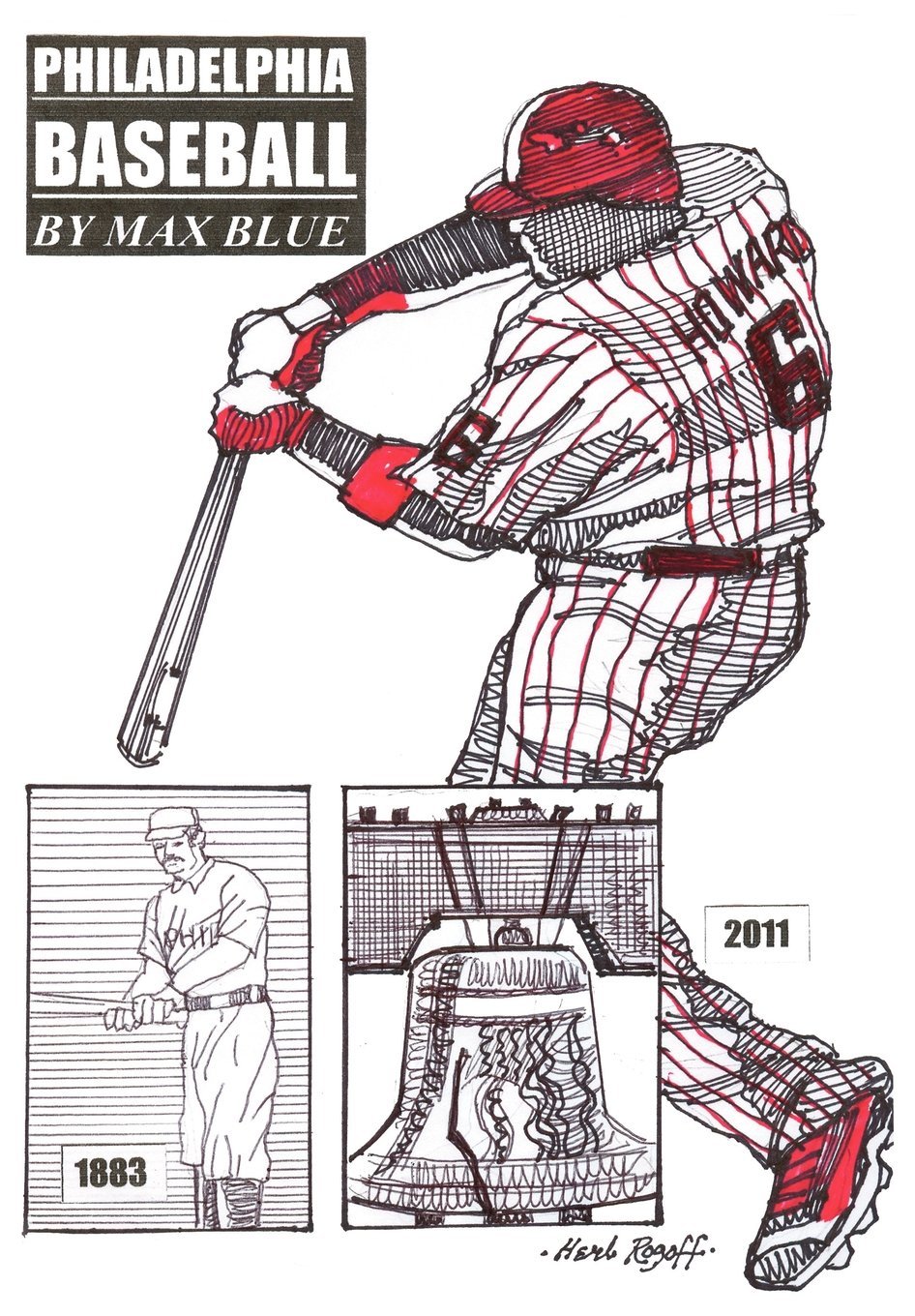
A Short History of the April 1997 Philadelphia Phillies
Five - What Grampa's Are For
God Is Alive And Playing Third Base for the Appleton
Papermakers

TIMES - ISBN 1-4137-0541-3 PublishAmerica - February 2004.
The book was inspired by 1) Barbara Tuchman's "The Zimmerman Telegram" 2) Leon
Wolf's "In Flanders Fields- the 1917 Campaign, 3) A lifetime fascination withWorld War I, 4) The 1916 New York Giants 26 game
winning streak and the pennant race that went with it, 5) Woodrow Wilson.
"If we do not know courage, we cannot accomplish our purpose, and this is an age that looks forward, not backward,
which rejects the standard of national selfishness that once governed the counsels of nations, and demands that they shall
give way to a new order of things in which the only questions will be, Is it right? Is it just? Is it in the interest of mankind?"
Woodrow
Wilson, 28th President of the United States of America
Chapter One - Only a Game
Sixteen year-old Ed Frederick, hollow-eyed from lack of
sleep, looks at his mother as if she has denied the existence of God.
Mother Frederick, God bless her, has done nothing more than
she almost always does in the morning, she has told her son to sit down and eat his breakfast. This time, she has added a
piece of shocking news that expresses her own jaded view of a situation that has filled her kitchen with tense emotions for
about as long as she can take. "It's only a game," she says, "and not the end of the world."
Ed's twin brother Ted is only slightly less astonished at Mother
Frederick's dismissal of an issue that has gnawed at the boys' sense of comfort and well-being for the past six months: the
fate of the 1916 Brooklyn baseball club, currently locked in a gripping pennant race with three other teams, and only six
games remaining in the season. The destiny of the team is at issue to be sure, but of equal, if not greater importance to
the boys, is the fortune of the individuals who make up the team, men they have come to know and admire, perhaps even love,
over the course of the long, difficult season. The club is a motley collection of professional ballplayers gathered from all
around the country to carry the banner of Brooklyn to the great National League cities of the East and Midwest in a country
that seems to have fallen in love with the game when it is not caught up in some kind of labor dispute. The team is searching
for an identity-newspaper accounts of theri games, often in the same column, call them the Robins, the Superbas, and the Dodgers,
a shortened version of theri original 1890 name-the Trolley Dodgers. Who are these guys?
The characters-
1. Ted and Ed Frederick. The twins were born in Brooklyn on January 1, 1900. They will
grow up with the 20th century. The book tells what happens to them in 1916, 1917, and 1918.
2. Mom and Pop Frederick. The twins' parents.
3. Hugh Fullerton- baseball writer for the New York Times.
4. Mary Cady - The young English girl is wounded by a shell burst from a German submarine within sight of America.
The twins will protect her.
5. Woodrow Wilson - President of the United States. With all his problems he finds time to help Mary and the
twins and they to help him.
6. Edith Galt Wilson - the president's wife.
7. Mama Leona - the president's cook.
8. Joseph Tumulty - the president's personal secretary.
9. Colonel House - the president's advisor.
10. Wickham Steed - foreign editor of the New York Times
11. Voska - the Bohemian runs a spy ring in New York City.
12. Raoul Lufbery - flying ace of the Lafayette Escadrille.
From the book, page 149
If anyone has their finger on the pulse of events in the fall
of 1916 it is Wickham Steed, Foreign Editor of the New York Times. Steed loves bagels; he is a regular
on Ted and Ed's midnight delivery route. He sits behind his desk chewing appreciatively on a raisin bagel and eyeing Ted and
Ed in a new light. "So," he begins, "my bagel boys want to enter the shadowy world of espionage. When do you plan to sleep?"
It is a good question, but Ted and Ed have heard enough small talk and
condescension from Colonel House; they are on a mission from the President of the United States. At the same time they don't
want tobe rude, their mother would not approve of that. Ted answers the question straight on. "It's more important for us
to help the President than to sleep," he says.
 |
 |
Is Max Blue really Don Quixote?

|
Max Blue's publishers-
iUniverse.com
Publish America.com
maxblue@snip.net
|
|
 |
 |
|
|
|